
Church Poll Manager

A printer is an electronic output device that converts digital information (from a computer, mobile, or other devices) into a hard copy on paper or other materials. Types and Manufacturers 1. Inkjet Printers Description:Inkjet printers spray tiny droplets of ink onto paper. They are best for home use, photo printing, and low-volume printing. Key Features: Low initial cost High-quality color printing Slower than laser printers Popular Manufacturers: HP (DeskJet, Ink Tank, OfficeJet) Canon (PIXMA series) Epson (EcoTank, Expression) 2. Laser Printers Description:Laser printers use toner powder and laser technology. Ideal for offices and bulk printing. Key Features: Fast printing speed Low cost per page Best for text documents Popular Manufacturers: Brother Industries (HL, MFC series) HP (LaserJet series) Canon (imageCLASS) 3. All-in-One (Multifunction) Description:These combine printing, scanning, copying, and faxing in one device. Key Features: Space-saving Ideal for offices and homes Wireless connectivity Manufacturers: HP Smart Tank / OfficeJet Canon
Graphics Drivers for Windows: Evolution, Intel vs AMD Comparison, Pros & Cons Graphics drivers are one of the most critical components of any Windows system. Whether you’re gaming, editing videos, or simply browsing, the graphics driver acts as a bridge between your operating system and the GPU (Graphics Processing Unit). In this blog post, we will explore: The evolution of graphics drivers Intel graphics driver history AMD graphics driver history Latest technologies Comparison (Intel vs AMD) Pros and Cons What is a Graphics Driver? A graphics driver is software that allows the operating system (Windows) to communicate with the graphics hardware. Without it, your system would only display basic visuals using generic drivers. Modern drivers: Improve performance Fix bugs Add support for new games and apps Enable advanced features like ray tracing, AI upscaling, etc. Evolution of Graphics Drivers (Windows Era) Early Era (Windows XP & Before) Basic drivers with
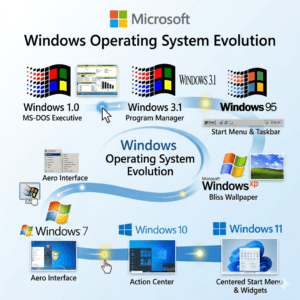
Microsoft Windows Operating System Evolution Overview Windows 1.0 Windows 1.0 is a graphical operating environment released by Microsoft in November 1985. It marked the company’s first major attempt to bring a visual, mouse-driven interface to personal computers running MS-DOS, introducing the foundation for what became the widely used Windows family of operating systems. Key facts Release date: November 20, 1985 Developer: Microsoft Platform: IBM PC-compatible systems Interface type: 16-bit graphical shell over MS-DOS End of support: December 31, 2001 Development and background Windows 1.0 was conceived to provide users with multitasking and graphical capabilities unavailable in command-line DOS. It ran on top of MS-DOS rather than replacing it, using a cooperative multitasking model. Early development began in 1981 under the codename “Interface Manager,” with Bill Gates positioning it as a response to the graphical innovations of Apple’s Lisa and Macintosh systems. User interface and features The system displayed tiled windows (not overlapping) and supported basic applications
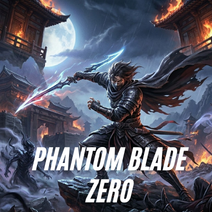
For those new to the franchise, Phantom Blade Zero marks a massive leap forward for S-Game. It is the “spiritual rebirth” of the studio’s 2010 indie RPG, Rainblood: Town of Death . Founder and Game Director “Soulframe” Liang has taken the cult classic framework and rebuilt it from the ground up using Unreal Engine 5, transitioning from a small-scale project to a big-budget action epic . The story is classic Wuxia tragedy mixed with a ticking clock. You play as Soul, a elite assassin of a mysterious organization known as “The Order.” Framed for the murder of his master and left for dead, Soul is miraculously saved by a mystic healer. However, the cure is only temporary. With just 66 days to live, he must battle through hordes of enemies, monstrosities, and former comrades to uncover the conspiracy before his time runs out . The “Kungfupunk” Aesthetic One of the most striking elements of Phantom Blade Zero is its visual